
Figure Cleaning Tools Checklist: How to Choose Brushes, Cloths, and Care Products
As figure collecting becomes increasingly popular among Chinese-speaking communities, proper maintenance and cleaning have become essential topics for collectors. Figures are made from diverse materials, with intricate structures and delicate paintwork. Using the wrong tools or methods can easily cause scratches, paint chipping, stickiness, or loose joints. Many beginners regret using alcohol for cleaning simply because the figure “looked dirty,” only to damage their prized collectibles.
To help collectors establish a safe and efficient cleaning routine, this article presents a professional guide covering materials knowledge, tool selection, care tips, and a step-by-step cleaning process. The goal is to create a Figure Cleaning Tools Checklist: How to Choose Brushes, Cloths, and Care Products, helping you select the right tools and maximize your figure’s longevity. The content is technically oriented rather than brand-focused, making it suitable for beginners as well as experienced collectors.
Why Figures Need Regular Cleaning
Indoor figures are exposed to various factors that can affect their appearance and integrity:
- Dust Accumulation
Dust settles on figure surfaces and adheres to paint, making them appear dull. Over time, stubborn spots can form. - Material Aging
Plastics such as PVC and ABS contain plasticizers. Contact with skin oils, sweat, or harsh cleaners may accelerate stickiness or yellowing. - Surface Contamination
Airborne oil, moisture, skin flakes, and pet hair can stick to the figure surface. - Dirt in Joints and Crevices
Articulated models or complex designs like flowing skirts and hair strands often trap dust in hard-to-reach areas, requiring precise tools for cleaning.
Choosing the right tools is therefore not just about aesthetics—it ensures your figure lasts longer without irreversible damage.
Figure Materials Basics: Why You Can’t Use Just Any Tool
Understanding your figure’s material is the first step in selecting safe cleaning tools:
- PVC (Polyvinyl Chloride)
The most common figure material. Soft, dust-attracting, and sensitive to alcohol.
⚠ Wiping with alcohol can dissolve the surface, causing cloudiness or stickiness. - ABS (Acrylonitrile Butadiene Styrene)
Hard plastic often used for stands, mechanisms, or weapons.
More resistant to alcohol but still should avoid prolonged exposure to strong cleaners. - PU Resin (Common in Garage Kits)
High-value and brittle. Hard brushes or excessive friction can easily damage it. - Metal Parts (Limited Edition Figures)
Prone to oxidation; should be kept dry after cleaning.
Knowing your materials helps you avoid damaging your figure when choosing tools.
Why Figures Need Regular Cleaning
Indoor figures are exposed to various factors that can affect their appearance and integrity:
- Dust Accumulation
Dust settles on figure surfaces and adheres to paint, making them appear dull. Over time, stubborn spots can form. - Material Aging
Plastics such as PVC and ABS contain plasticizers. Contact with skin oils, sweat, or harsh cleaners may accelerate stickiness or yellowing. - Surface Contamination
Airborne oil, moisture, skin flakes, and pet hair can stick to the figure surface. - Dirt in Joints and Crevices
Articulated models or complex designs like flowing skirts and hair strands often trap dust in hard-to-reach areas, requiring precise tools for cleaning.
Choosing the right tools is therefore not just about aesthetics—it ensures your figure lasts longer without irreversible damage.
Figure Materials Basics: Why You Can’t Use Just Any Tool
Understanding your figure’s material is the first step in selecting safe cleaning tools:
- PVC (Polyvinyl Chloride)
The most common figure material. Soft, dust-attracting, and sensitive to alcohol.
⚠ Wiping with alcohol can dissolve the surface, causing cloudiness or stickiness. - ABS (Acrylonitrile Butadiene Styrene)
Hard plastic often used for stands, mechanisms, or weapons.
More resistant to alcohol but still should avoid prolonged exposure to strong cleaners. - PU Resin (Common in Garage Kits)
High-value and brittle. Hard brushes or excessive friction can easily damage it. - Metal Parts (Limited Edition Figures)
Prone to oxidation; should be kept dry after cleaning.
Knowing your materials helps you avoid damaging your figure when choosing tools.
Figure Cleaning Tools Checklist: Brushes
Brushes are the most commonly used cleaning tool and also the easiest for beginners to choose incorrectly. Here’s a breakdown:
1. Ultra-Fine Fiber Brushes (Highly Recommended for Beginners)
Soft, non-shedding brushes that are extremely safe on paint surfaces.
Suitable for:
- Surface dust
- Facial details
- Skin areas
- Gradient-painted sections
Advantages:
- High safety
- Low learning curve
- Perfect for daily dusting
Tip: Denser bristles pick up more dust.
2. Makeup Brushes (Most Popular Among Collectors)
Soft, varied, and excellent for cleaning.
Selection tips:
- Soft hair (goat or synthetic)
- Non-shedding, non-irritating
- Choose brush size according to the area
Suitable for:
- Hair strands
- Clothing folds
- Decorative patterns
Avoid:
- Rough surfaces
- Damp areas (bristles may stick)
3. Anti-Static Dust Brushes
Some figures attract static, making dust harder to remove.
Advantages:
- Reduces static cling
- More efficient than regular brushes
Suitable for:
- Black figures (dust is obvious)
- PVC textured areas
These brushes are usually more expensive but slow down dust accumulation.
4. Hard Brushes (Not Recommended for Painted Surfaces)
Examples: toothbrushes or modeling kit brushes.
Suitable for:
- Rough bases
- Sand or rock terrain
- Unpainted parts
⚠ Never use on smooth, painted surfaces.
Cloths and Wiping Tools: Choosing Without Scratching
Cloths mainly handle “wet wiping” and final touches:
1. Microfiber Cloths (Safest Choice)
Commonly used for glasses or camera lenses, least likely to scratch.
Suitable for:
- Hair strands
- Skin paint
- Large smooth surfaces
Tip:
- Dry cloth for dusting
- Damp cloth for stains
2. Lens Cloths (Non-Shedding)
Perfect for delicate areas:
- Facial features
- Metal parts
- Glossy surfaces
3. Cotton Swabs (For Small Crevices)
Ideal for hard-to-reach gaps.
Usage tips:
- Slightly dampen (not dripping)
- Rotate while cleaning to avoid pushing dirt deeper
4. Avoid These Cloths (Common Beginner Mistakes)
❌ Regular towels (scratches easily)
❌ Cotton clothing (sheds fibers)
❌ Wet wipes (contain alcohol or chemicals)
Cleaners and Care Products: Use or Not?
Cleaning agents are often misused:
1. Alcohol: Figure’s Worst Enemy (Avoid)
Many beginners assume alcohol is good for disinfecting or degreasing, but it can:
- Make PVC sticky
- Cloud ABS
- Dissolve paint
- Cause uneven or white surfaces
2. Neutral Detergent (Safe Choice)
Dilute 1:50–1:100 with water.
Suitable for:
- Oil stains
- Fingerprints
- Stubborn dirt
Usage:
- Apply diluted solution with a cloth
- Wipe gently
- Rinse with clean water
- Air dry
3. Specialized Model Cleaner (Mild Type Only)
Available in hobby shops, designed for resin or painted figures.
Note: Avoid strong solvent-based formulas.
4. Kneaded Eraser Cleaning (High Safety)
Press lightly into small gaps to lift dust without damaging paint.
Suitable for:
- Crevices
- Decorative lines
- Hair strand grooves
5. Anti-Static Spray (Optional)
Spray on cloth, not directly on the figure.
Effect:
- Reduces dust adhesion
- Keeps surface dry
Full Figure Cleaning Workflow (Professional Standard)
Step-by-step cleaning process to ensure safety and long-term care:
Step 1: Prepare Environment
- Turn off fans to reduce airborne dust
- Use soft lighting for detail observation
- Keep hands dry
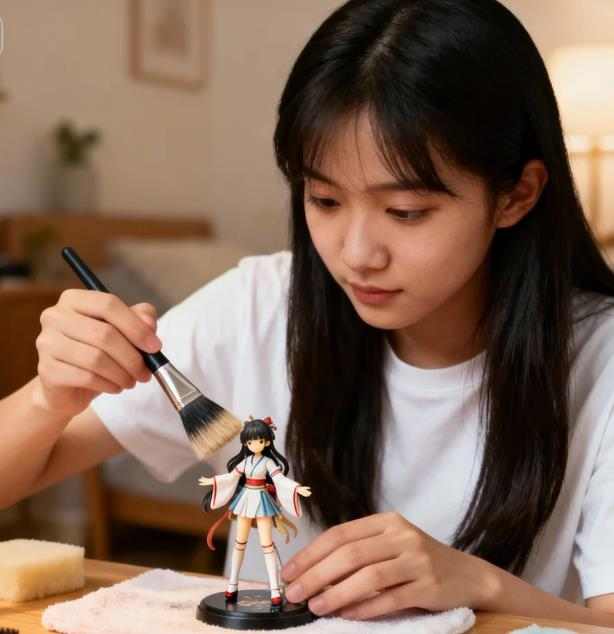
Step 2: Initial Dusting (Brushes)
- Use ultra-fine fiber or makeup brush
- Brush lightly in a consistent direction
Tips:
- Use just enough pressure to move bristles
- Avoid rubbing against paint repeatedly
Step 3: Detail Cleaning (Cotton Swabs & Kneaded Eraser)
- Use slightly damp swabs for crevices
- Press kneaded eraser lightly on hard-to-reach areas
Step 4: Local Wet Wiping (Neutral Detergent)
- Apply diluted solution to cloth
- Gently wipe oily or fingerprinted areas in circular motion
- Wipe again with clean water
⚠ Do not soak the figure! Can loosen glue or warp parts
Step 5: Complete Drying
- Air dry in a cool place for 10–20 minutes
- Avoid hair dryers or heat
Step 6: Final Check and Care
- Wipe with dry cloth
- Optionally, use anti-static cloth for final finish
- Return figure to display case
Daily Maintenance and Display Tips
Preventive care reduces cleaning frequency and damage:
- Use Display Cases
Protects from dust and reduces cleaning needs. - Control Humidity (40–55%)
- High humidity causes PVC stickiness, metal oxidation, mold.
- Avoid Direct Sunlight and Strong UV
- UV causes yellowing, brittleness, paint fading
- Use UV filters or shades near windows
- Limit Frequent Handling
- Skin oils accelerate aging
- Wash hands or wear cotton gloves before touching
- Cleaning Frequency Recommendations
- In a display case: light brushing every 1–2 months
- Without a display case: every 1–2 weeks
- Deep cleaning: every 3–6 months
Common Cleaning Mistakes to Avoid
❌ Using alcohol directly
❌ Using sticky lint rollers (removes paint)
❌ Brushing painted surfaces with hard brushes
❌ Cleaning with hot water
❌ Disassembling parts for cleaning
Avoiding these mistakes can extend your figure’s lifespan by years.
Choosing the Right Tools Keeps Your Figures in Top Condition
Cleaning figures isn’t difficult; the key is the right tools and methods.
For most situations:
- Soft-bristled brushes
- Microfiber cloths
- Neutral detergent
For advanced cleaning:
- Kneaded erasers
- Cotton swabs
- Anti-static tools
Mastering material knowledge, tool selection, and cleaning workflow allows safe cleaning without unnecessary damage, keeping your figures looking vibrant for years.